Article: Diwali 2026 in Australia: The Five Days, and What to Set Up for Each
Diwali 2026 in Australia: The Five Days, and What to Set Up for Each
Diwali 2026 falls on Sunday 8 November, and for once the calendar has been kind to us. The main night lands on a weekend, the whole five-day run sits between Friday 6 and Tuesday 10 November, and in Australia it arrives in late spring — warm evenings, long dusk, doors open. If you are planning Diwali 2026 in Australia, this is a guide to what each of the five days is actually for, and what belongs on the table for each one.
A note on timing that trips people up every year here: by early November the eastern states are on daylight saving, so dusk comes late. In Melbourne the sun sets at 8:03pm on 8 November. Diyas lit "at sunset" means after eight o'clock, not six — which in practice means dinner first, lamps after. Queensland, Western Australia and the Northern Territory don't move their clocks, so dusk there arrives earlier by the clock.
When is Diwali 2026 in Australia?
Diwali 2026 is on Sunday 8 November. The festival runs across five days, each with its own name and its own purpose:
| Day | Date | What it marks |
|---|---|---|
| Dhanteras | Friday 6 November 2026 | The buying of metal; health and prosperity |
| Naraka Chaturdashi (Choti Diwali) | Saturday 7 November 2026 | Cleansing; the first lamps |
| Diwali / Lakshmi Puja | Sunday 8 November 2026 | The main night; the house fully lit |
| Govardhan Puja (Annakut) | Monday 9 November 2026 | Food, gratitude, abundance |
| Bhai Dooj | Tuesday 10 November 2026 | Siblings; gifts exchanged |
Diwali is not a public holiday in Australia, so the Monday and Tuesday are working days for most people. Worth knowing when you plan the cooking.
Day 1 — Dhanteras, Friday 6 November

Dhanteras is the day you buy metal. The name comes from Dhanvantari, the physician of the gods, who is said to have risen from the churning of the ocean holding a vessel of amrita — which is why the tradition is tied to both health and prosperity, and why what you bring home is traditionally brass, bronze, copper or silver rather than anything else.
In practice, most households buy one considered piece rather than many small ones. A Brass Lakshmi Ganesh Diya Set ($119.99) is the classic choice because it carries you through the next two evenings as well. If you want something that will still be on the sideboard in twenty years, the Bronze Pooja Thali Set ($275) is the piece people buy once. We also carry a Brass Dhanvantri Idol ($124.99) — fitting for the day, though only a handful remain.
Set up: clear the entry table. One new metal piece, placed where you'll see it on the way in.
Day 2 — Naraka Chaturdashi, Saturday 7 November

Choti Diwali, or "small Diwali". Traditionally a day of cleansing — an early oil bath, the house swept out — and the first night that lamps go up properly. It's the rehearsal for Sunday, and the better night to do the fiddly work of placing everything while you're not also cooking for twelve.
This is the night for quantity over ceremony. A Brass Lotus Diya ($14.99) or a Brass Shankh Diya ($20) is what you buy six of and run along a windowsill or down the length of a table. For anywhere with a breeze — a balcony, a verandah, a Melbourne courtyard in November — an enclosed Metal Cage Candle Lantern ($69.99) will stay alight where an open diya won't. Browse the full brass diya collection for the range.
Set up: lamps along thresholds — the front door, windowsills, the top of the stairs. Light them and check what actually catches the eye from the street.
Day 3 — Diwali and Lakshmi Puja, Sunday 8 November

The main night, Lakshmi Puja is performed after dark, which in 2026 means after 8:03pm in Melbourne — worth telling guests, because "come for Diwali" and "come for the puja" are two different arrival times.
Three things carry the evening: the pooja space, the centrepiece, and the light everywhere else.
- The pooja space. A Brass Ganesha Diya ($59.99) and a Brass Swastik Diya ($59.99) flanking the idols is the standard arrangement. The Lakshmi Ganesh Puja Set ($159) puts the whole thing together, wall hanging included, if you're setting up a corner from scratch.
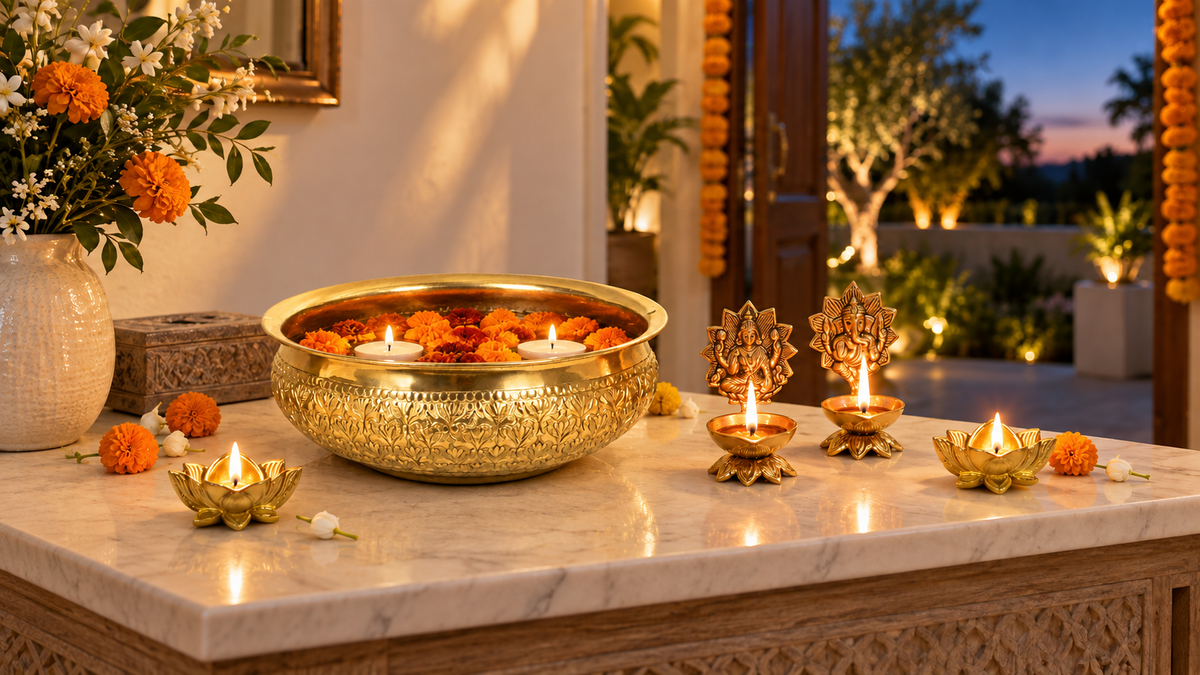
- The centrepiece. An urli — a wide, shallow brass bowl filled with water, floating marigolds and tealights — is the single piece that makes a room read as Diwali. The Modini Chitai Urli Gold ($94.99) suits a dining table; the larger Mayur Brass Urli ($219.99) is an entryway piece. The Lotus Urli Centrepiece Set ($149) arrives with the diyas and votives already matched to it.
- Everywhere else. Glass votive holders ($34.99) scattered low across shelves and side tables do more for the room than one bright lamp. Our votives are deliberately unscented — several customers have told us scented candles in a closed room are a problem for them, so we leave the fragrance to the cooking.
Set up: urli on the table by midday so the flowers settle. Everything else lit from 7:30pm, puja after 8pm.
Day 4 — Govardhan Puja, Monday 9 November

Annakut means "mountain of food". Govardhan Puja is the day of the spread — a table laid with more than anyone can eat, offered first and shared after. It is the most practical day of the five, and the one where serving pieces earn their keep.
A Gold Leaf Shaped Platter ($59.99) or the round Metal Hammered Platter in Gold ($79.99) will hold sweets on Monday and sit on the coffee table for the rest of the year, which is the right way to buy festive pieces. The Brass Kalpvriksh with Birds ($134.99) — the wish-fulfilling tree — is the thematic piece for a day about abundance.
Set up: platters out, the diyas from Sunday relit. Nothing new to buy if you've planned the earlier days properly.
Day 5 — Bhai Dooj, Tuesday 10 November

The last day, and the one about siblings. A sister applies a tilak, a brother gives a gift, and the gift is meant to be something kept rather than consumed.
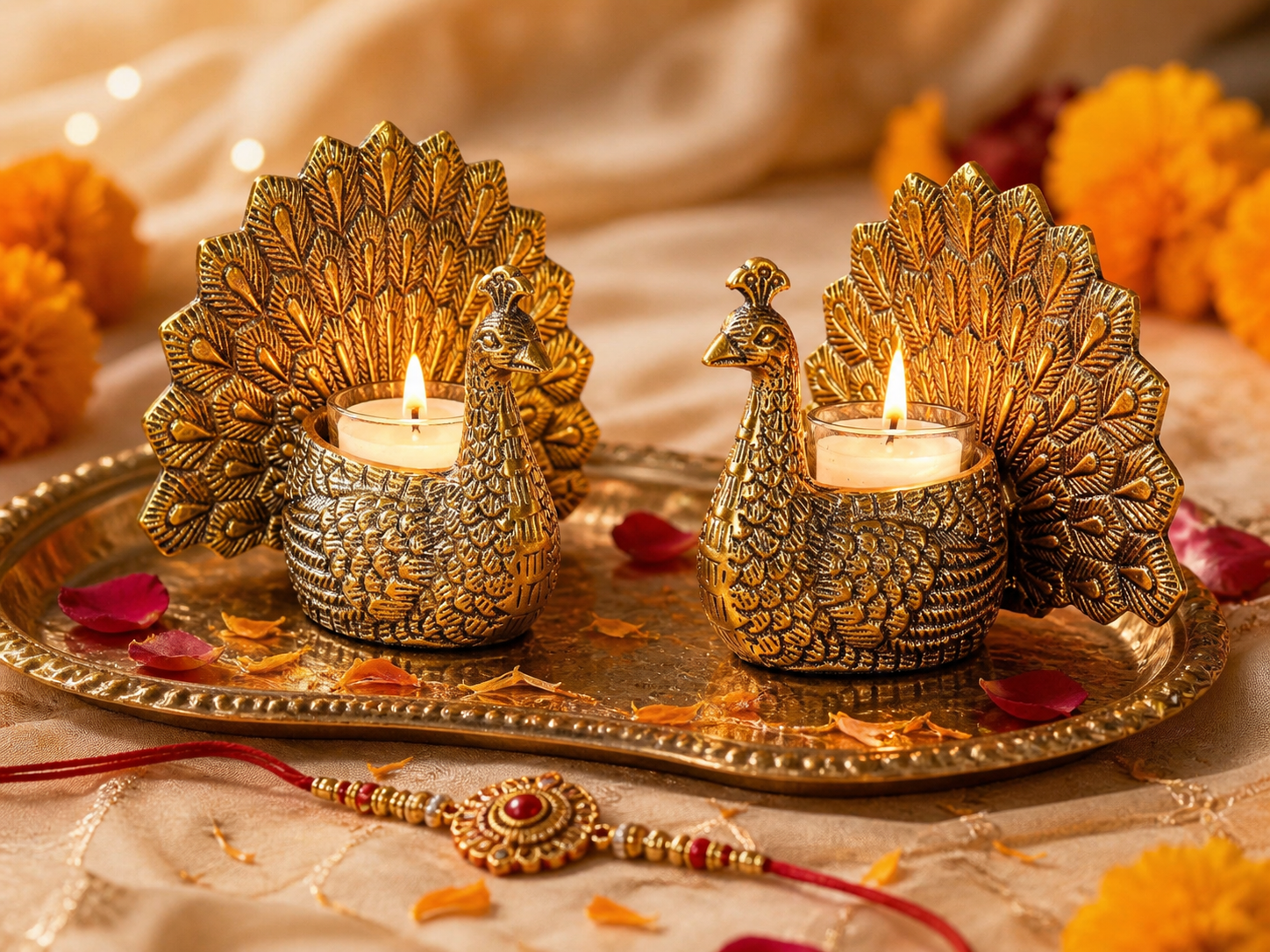
Pairs work well here for obvious reasons. The Gold Swan Figurine Candle Holder Pair ($79.99) and the Owl Figurine Pair Tea Light Holder ($69.99) both come as two, and both arrive gift-boxed. For a sibling who has just moved into their own place, the Diwali Ghar Ki Shobha gift set ($119) gives them the start of their own collection. The full range sits in Diwali Gift Sets & Festive Bundles.
What to order, and when
We post within one business day of receiving an order, and delivery takes two to four business days anywhere in Australia. So allow three to five business days door to door. Courier networks do slow down through late October, and that part is outside our control — so the dates below build in a buffer rather than cutting it to the day.
- Friday 16 October — office and bulk gifting, and anything going to a regional address. The Corporate Diwali Gifting Pack of 5 ($329) is built for this, and bulk orders need the extra lead time.
- Wednesday 21 October — for Karva Chauth, which falls on Thursday 29 October in 2026. The Karva Chauth Couple's Glow Set ($139) is made for it.
- Monday 26 October — anything you want in the house for Dhanteras on Friday 6 November.
- Friday 30 October — the last comfortable date for the main night on Sunday 8 November.
- After Monday 2 November — too late to rely on for a centrepiece. Order a gift instead; Bhai Dooj isn't until Tuesday 10 November, so there is still room.
One practical tip if you are cutting it fine: order early in the week rather than on a Friday. A Friday order goes out Monday and loses the weekend before it has even started moving.
Lighting diyas safely in an Australian November
This part doesn't come up in guides written for India, and it should. Early November is the start of fire season across much of the country, and a Diwali table is a lot of open flame in a dry month.
- Keep open diyas on metal, stone or tile — never directly on a timber table, and never on a cloth runner.
- Outdoors, use enclosed lanterns or floating tealights in an urli. A shallow bowl of water is the safest open flame you can put on a balcony.
- Check your council's fire restrictions before lighting anything on a verandah or in a garden. Some Victorian and NSW councils declare fire danger periods in the first half of November.
- Brass gets hot. Give a diya twenty minutes to cool before moving it.
Frequently asked questions
When is Diwali 2026 in Australia?
Diwali 2026 falls on Sunday 8 November. The full five-day festival runs from Friday 6 November (Dhanteras) to Tuesday 10 November (Bhai Dooj). The date is the same across Australia, though the time of sunset — and therefore when lamps are lit — varies by state.
What date is Dhanteras 2026?
Dhanteras 2026 is on Friday 6 November, two days before Diwali. It is traditionally the day for buying metal objects — brass, bronze, copper or silver — for the home.
What time should diyas be lit on Diwali 2026?
Diyas are lit at dusk. In Melbourne on 8 November 2026 the sun sets at 8:03pm AEDT, so lamps go up shortly after eight. Sunset is later again in Adelaide and earlier in Brisbane and Perth, which do not observe daylight saving.
Is Diwali a public holiday in Australia?
No. Diwali is not a public holiday anywhere in Australia. In 2026 the main night falls on a Sunday, so the evening itself is free, but Govardhan Puja and Bhai Dooj land on the Monday and Tuesday.
When should I order to get Diwali decorations delivered in time?
Order by Monday 26 October 2026 for Dhanteras on Friday 6 November, and by Friday 30 October for the main night on Sunday 8 November. Indian Impressions posts within one business day and Australia Post takes two to four business days nationwide, so allow three to five business days door to door.
What should you buy on Dhanteras?
Traditionally a metal object for the home — most commonly brass or bronze. A diya set, a pooja thali, an urli or a brass idol all fit the custom. The convention is one considered piece rather than several small ones.
What is an urli, and how do you use it at Diwali?
An urli is a wide, shallow bowl, traditionally brass, originally used for cooking in South India. At Diwali it is filled with water and floated with flowers — usually marigolds — and tealights, and placed at the entrance or as a table centrepiece. It is also the safest way to have open flame on an outdoor table.
One last thing
The part of Diwali that people remember isn't the number of lamps. It's whether the house felt ready when the first guest walked in. Everything above is arranged so that by Sunday evening there is nothing left to do but light things and answer the door.
Browse Pooja Essentials, Urlis & Trays and Festive Décor — handcrafted in India, shipped across Australia.